


The right Dimplex Quantum heater should suit your room, your daily routine and your electricity tariff. This guide explains how to compare the five Quantum RF models, what affects the size you need and what to check before ordering.
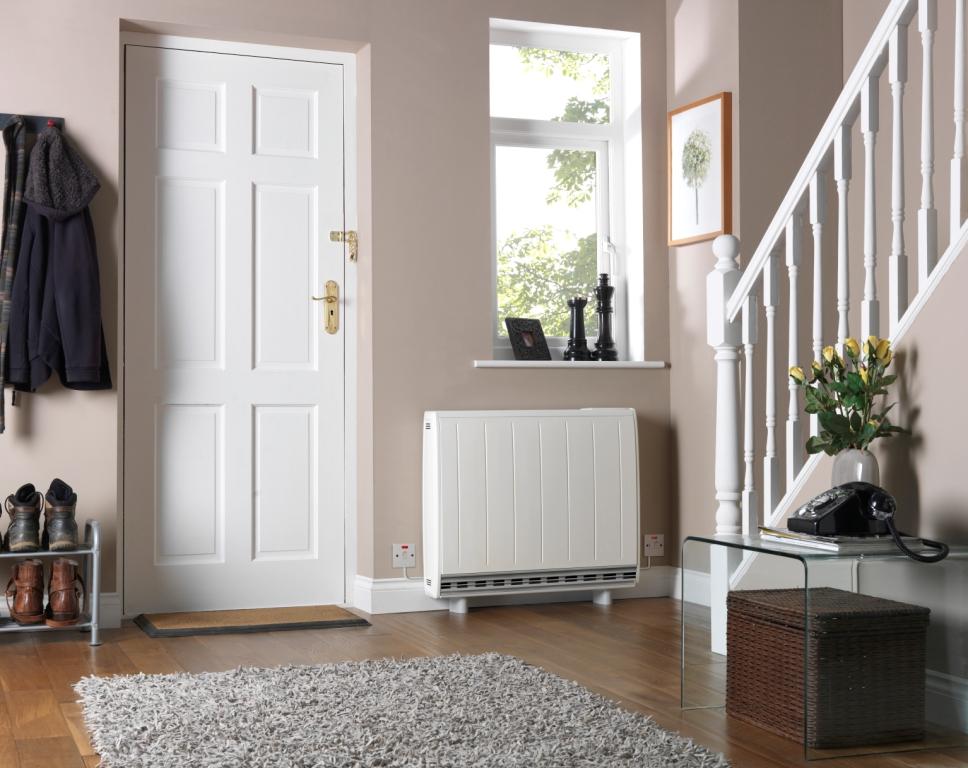
How to choose the right Quantum heater
Start with the space you want to heat. A room described as a “double bedroom” or “family lounge” can vary considerably in size and insulation, so the room name is not enough to select a model.
- Measure the floor area. Multiply the length by the width in metres. A room measuring 4 m by 3 m has a floor area of 12 m². For an L-shaped room, work out the two rectangular areas separately and add them together.
- Check the construction and exposure. Note the wall type and how many walls face outdoors. A wall between two heated rooms is an internal wall. If you do not know whether the walls are insulated, check your property information or ask your installer.
- Describe how you use the room. Explain when you want warmth, whether doors normally stay open and whether there are large windows, high ceilings or an open staircase.
- Confirm the model and installation. Once you have a suggested model code, compare its dimensions and specifications. Your electrician should check the room requirement and the available charging arrangement before you order.
Why floor area does not tell the whole story
Consider two rooms that both measure 12 m². One has insulated cavity walls and a single outside wall; the other has solid walls and two outside walls. They have the same floor area, but different heating needs.
As an illustration, EO’s quick sizing guide points towards QM070RF for the first set of details and QM100RF for the second. These are starting estimates, not guaranteed room coverage. Glazing, ceiling height and the actual insulation can change the final selection.
Compare the five Dimplex Quantum RF models
The range runs from QM050RF to QM150RF. The higher-rated models provide greater heating output and storage capacity, but choosing the largest without checking the room can add unnecessary size and purchase cost.
| Model | Rated output | Charging input | Maximum stored energy |
|---|---|---|---|
| QM050RF | 500 W | 1,020 W | 7.14 kWh |
| QM070RF | 700 W | 1,560 W | 10.92 kWh |
| QM100RF | 1,000 W | 2,220 W | 15.54 kWh |
| QM125RF | 1,250 W | 2,760 W | 19.32 kWh |
| QM150RF | 1,500 W | 3,300 W | 23.10 kWh |
The figures are rated specifications, not a forecast of daily electricity use. Check the documentation for the product series being supplied.
What if one heater is not enough?
A large or exposed room may need more than one heater or a different layout. Do not assume that QM150RF will cover every space. Share the measurements, construction and intended heating hours with your installer so the room can be assessed as a whole.
Is Quantum the right type of heating for your home?
Quantum is a high heat retention storage heater. It stores warmth in an insulated core during the configured charging period and makes that heat available later. Its controls manage charging and room temperature around the heating schedule.
It is worth considering when upgrading older storage heating or planning regular electric heating around a suitable off-peak tariff. The electricity setup matters as much as the heater: ask your supplier to confirm the actual cheaper-rate hours and whether the proposed tariff suits your meter and installation.
A panel heater or direct-acting electric radiator works differently, supplying heat while it uses electricity. For a room used only occasionally, compare both approaches, including installation costs, unit rates and how long the room needs heating. One product type does not have to suit every room in a home.
What to consider in each room
Bedrooms
Think about morning and evening comfort, plus any daytime use. Note large windows and exposed corners. Choose around the room’s actual needs rather than assuming every bedroom should have the smallest model.
Living rooms
Explain whether the space is occupied throughout the day and whether it opens into other rooms. Patio doors, bay windows and high ceilings are useful details to include when discussing the size.
Hallways and open-plan spaces
An open staircase or connection to another room can make the heated area harder to define. Measure and describe the whole connected space, rather than just the patch of floor around the heater.
Several rooms
Make a separate entry for each room, with its measurements and proposed model. This keeps your quotation and order clear and helps avoid buying identical heaters for rooms with different requirements.
Understanding Quantum running costs
Running costs depend on the amount of electricity used in kWh and the unit rate paid for it. A heater’s charging rating is power; it is not an automatic daily electricity charge. The energy taken in can vary with heating demand and settings.
When comparing tariffs, look at the cheaper charging rate, the daytime rate, the standing charge and your other household electricity use. A low overnight rate on its own does not tell you what the whole bill will be.
10 kWh of charging at 15p per kWh would cost £1.50. A further 1 kWh used at 30p per kWh would add 30p, giving £1.80 for those energy amounts.
These are hypothetical rates and usage amounts to explain the calculation, not current tariff prices or a Quantum running-cost forecast. Standing charges are excluded.
A new heater does not guarantee the same saving in every home. For a useful comparison, use your existing consumption, the proposed tariff and a realistic heating schedule.
Do you need the Dimplex Control Hub?
You can use Quantum’s own controls without buying a Hub. If you want compatible remote app control, supported Quantum RF models connect through a separately purchased Dimplex Control Hub .
The heater’s RF connection is not a direct connection to your home Wi-Fi. Check the heater series and Hub compatibility, especially when extending an existing system. If you already have a suitable Hub, check before adding another to your order.
Before you order: a practical checklist
- Model: confirm the exact code for each room.
- Space: check the product dimensions and allow for the installation clearances.
- Electricity: have the circuits, available supplies and charging arrangement checked.
- Controls: decide whether local controls are enough or you want compatible app control.
- Delivery: check the included items, delivery details, access to the room and removal arrangements for the old appliance.
Use a suitably qualified electrician for installation. Secure fixing, floor support, clearances and the correct electrical setup must follow the instructions for the exact heater series.
For help comparing options, send the EO team the room’s length, width and ceiling height, the wall type, the number of outside walls and a photograph of the existing heater label. This gives us a useful starting point for discussing the range.
Common questions about Dimplex Quantum
Which Dimplex Quantum model should I choose?
Choose around the room’s heating requirement, wall construction and exposure, then check the available space and charging period. Use the model comparison above to understand the range. Your electrician should confirm the final model before you order.
Can two rooms of the same size need different heaters?
Yes. Insulation, windows, ceiling height and the number of outside walls can change the heating requirement. A room’s floor area alone does not tell you how quickly it loses warmth.
Do I need to buy a Dimplex Control Hub?
Only if you want compatible remote app control. Supported Quantum RF heaters use the Dimplex Control Hub, sold separately. You can use the heater’s own controls without buying a Hub.
Does the largest Quantum cost more to run all the time?
A higher rating does not mean the heater automatically uses that amount of electricity continuously. Actual consumption depends on the heat needed, charging and control settings. Choose the correctly sized heater and compare energy use in kWh.
Can Quantum replace my old night storage heater?
It can be an option for upgrading existing storage heating. Have your electrician check the old circuit, supply arrangement, room requirement and fixing position. A similar-looking heater is not automatically a like-for-like replacement.
Can a Quantum heater be fitted in a bathroom?
Bathroom suitability depends on the exact model, its IP rating, the installation position and wiring requirements. Ask your electrician to check the manufacturer’s instructions before choosing a location.
Why is my heater not warm straight after switching it on?
It may be waiting for the next charging period or programmed heating time. After a long shutdown, allow time for the controls to settle into the room’s conditions. Check the manual, clock and schedule, and seek support for persistent faults.
What should I check on the product page before ordering?
Check the exact model code, dimensions, specification, included items and delivery information. If replacing an existing heater, keep a photograph of its model label and share the room details with your installer.
Need help comparing models? Contact the EO team →